01 | 6 Californias Initiative
Silicon Valley State Branding
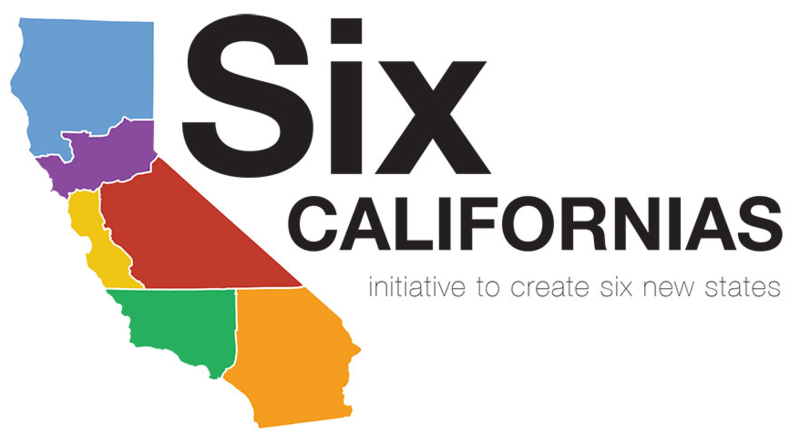
The Six Californias Initiative (#13-0063) was a proposition (Formally titled: Division of California into Six States, Initiative Statutory and Constitutional Amendment) that was being pushed to be on the State’s 2016 ballot. It was sponsored by financier Timothy C. Draper. It would have called on the U.S. Congress to officially divide the state into six seperate states. Ultimately the proposition did not qualify for the November 8th, 2016 ballot. If it had succeded it would have broken California into the following states:
Central California, which would include the counties of Alpina, Calaveras, Fresno, Inyo, Kern, Kings, Madera, Mariposa, Merced, Mono, San Joaquin, Stanislaus, Tulare and Tuolumne.
Jefferson, which would include the counties of Butte, Colusa, Del Norte, Glenn, Humboldt, Lake, Laasen, Mendocino, Modoc, Plumas, Siskiyou, Shasta, Tehama and Trinity.
North California, which would include the counties of Amador, El Dorado, Marin, Napa, Nevada, Placer, Sacramento, Sierra, Solano, Sonoma, Sutter, Yolo and Yuba.
Silicon Valley, which would include the counties of San Mateo, Santa Clara, Alameda, Contra Costa, San Francisco, San Benito, Santa Cruz and Monterey.
South California, which would include the counties of Imperial, Orange, Riverside, San Bernardino and San Diego.
West California, which would include the counties of Santa Barbara, San Luis Obispo, Los Angeles and Ventura.
02 | Arguments in Favor
Draper listed five reasons for supporting the “Six Californias” initiative during the tech crunch:
It is about time California was properly represented with Senators in Washington. Now our number of Senators per person will be about average.
Competition is good, monopolies are bad. This initiative encourages more competition and less monopolistic power. Like all competitive systems, costs will be lower and service will be better.
Each new state can start fresh. From a new crowd-sourced state flower to a more relevant constitution.
Decisions can be more relevant to the population. The regulations in one new state are not appropriate for another.
Individuals can move between states more freely
Additional Arguments in favor included:
What I'm proposing here is to bring us closer to our government. We are all better off with more local government -- local government is more efficient, it's more effective, it represents us better.
The government always used to work for us. Over the last 15 to 20 years, I feel like the government is saying, ‘You’re working for me.’ We’ve gone from, in effect, a very free country to one where it’s moving toward, I guess it’s slavery… When you work for your government, when your government forces you to do something, it’s slavery. We need to take it back… I want (government) to be for the people. It’s starting to feel like it’s an ivory tower. There’s more and more control in the hands of people that are further and further from the decision.
03 | The Opposition’s Arguement
OneCalifornia formed in opposition to Six Californias. The organization was founded by Joe Rodota, a Republican strategist, and Steve Mavigilo, a Democratic consultant. Sovereign California, Inc. also opposed the initiative with the group reportably planning to push ballot meassures seeking to increase “sub-national sovereignty” in 2016.
Notable Individuals:
Joe Rodota, CEO and Founder, Forward Observer
Robert Price, executive editor of The Bakersfield Californian
Mary Buffett, author and Warren Buffett scholar
Peter Scheer, lawyer and executive director of the First Amendment Coalition
Their Arguments:
Mary Buffett: called the plan a "balkanized mess." She claimed to agree with Draper on the current problems he identified, but argued that "you don't have to blow up California in order to solve it." She listed a few problems with the plan:
"First, there is the issue of water. Without water distribution, California would quickly revert back to desert and grassland... However, under Draper's Plan, water intended for use in Los Angeles would have to pass through the states of "Jefferson," "North California," and "Central California" before it ever reached Los Angeles in the new state of "West California." What is to keep a new Governor of "Central California" or "North California" from diverting more water to local farmers and closing the spigot for Los Angeles? Nothing. Why? The new Governor of "Central California" will cater to the needs of his/her voters as opposed to any out-of-state concerns, like a thirsty Los Angeles."
"Second, there is the case of higher education. If you lived in Oroville, Eureka, or Redding, your children are simply shut out of in-state tuition rates for the University of California system. Why? There are no UC campuses in Draper's State of "Jefferson..".. However, if you are fortunate enough to live in the new state of "Silicon Valley" you have a plethora of choices, paid for by residents from all of California, including the good people of Oroville, Eureka, or Redding. As a resident of the new state of "West California," I am rolling my eyes a bit because it's clear that this new fictional state of "Silicon Valley" gets the best deal while the rest of the of other California states get the short shrift."
"Finally, taxes will inevitably rise. Instead of one state, where costs of government are spread over a population base of 38 million people, each of Draper's six states will have to create their own institutional functions of state government, from their own DMVs, the prison systems, state police and to everything in-between. While these new states will partially inherit legacy programs from the old State of California, each governor will have to create new command and control functions for everything that once radiated from Sacramento. That will cost money and nobody knows that amount. All we know is that somebody will have to pay for things."
Robert Price: criticized the initiative as generating inequality, devastating revenues for public assistance programs and fragmenting an economic powerhouse:
“Draper's home "state" of Silicon Valley (yes, that's what he suggests calling it) would become the wealthiest state in the U.S. -- and, freed from the obligations of propping up the likes of us here in the Valley, would no doubt grow richer still.”
“The state of Central California, containing most of the Central Valley, including Bakersfield, Fresno, Stockton, the Sierra Nevada and the eastern desert, would be the poorest. And I don't mean just among these severed siblings; we'd be the poorest state in the nation, displacing Mississippi, and as such would be in line for perhaps $2,500 in per capita federal spending… We would almost certainly have the lightest tax burden of any state among the six, and possibly the lightest anywhere in the U.S., but without the support of the world's ninth-largest economy and its diversified muscle, we might have some trouble.”
Joe Rodota: the founder and CEO of Forward Observer, argued against the initiative:
"Unlike venture capitalists, voters don't calculate risk. They seek to minimize it. And splitting the state into six pieces carries obvious and arguably insurmountable political risks."
"Jefferson California, a new state to be comprised of counties in the far north, would have not one campus in the University of California system if split off from the rest of the state as proposed. Just how would a family from Redding or Chico feel about paying $36,000 in out-of-state tuition to send their son or daughter to UC Davis?"
"Think of the thousands of business transactions that take place between Southern and Northern California each day. Many of those would now be between states, triggering federal regulation of interstate commerce."
"And how would the new state of Silicon Valley, which is a net importer of water, guarantee adequate water supplies to its residents and industries?"
Other Arguments:
Kevin Modesti of the Los Angeles Daily News said, "Draper argues that California’s diversity and size makes it ungovernable. But that’s letting the people who govern it, and the people who vote for those public officials, off the hook for their failures. Your city is a lot smaller and probably less diverse than the state, but is your city governed as well as it should be? Size isn’t the issue. If a public official can’t do the job unless he’s in a tiny, homogeneous state, he’s in the wrong line of work."
Carlos Garcia of the Latin Post noted, "This comes at a time when a large number of corporations Silicon Valley corporations already hide their tax dollars overseas, thereby avoiding paying into the government at all. According to Bloomberg, the top ten corporate tax avoiders are tech companies: 1. Microsoft, $76.4 billion; 2. IBM, $44.4 billion; 3. Cisco Systems, $41.3 billion; 4. Apple, $40.4 billion; 5. Hewlett-Packard, $33.4 billion; 6. Google, $33.3 billion; 7. Oracle, $26.2 billion; 8. Dell, $19.0 billion; 9. Intel, $17.5 billion; 10. Qualcomm, $16.4 billion. This is consistent with the idea that people behind such an industry are not interested in paying taxes which the government could use to improve the lives of people in the poorer parts of California, which is one of the reasons given for dividing the state."
All information was from: https://ballotpedia.org/%22Six_Californias%22_Initiative_(2016)
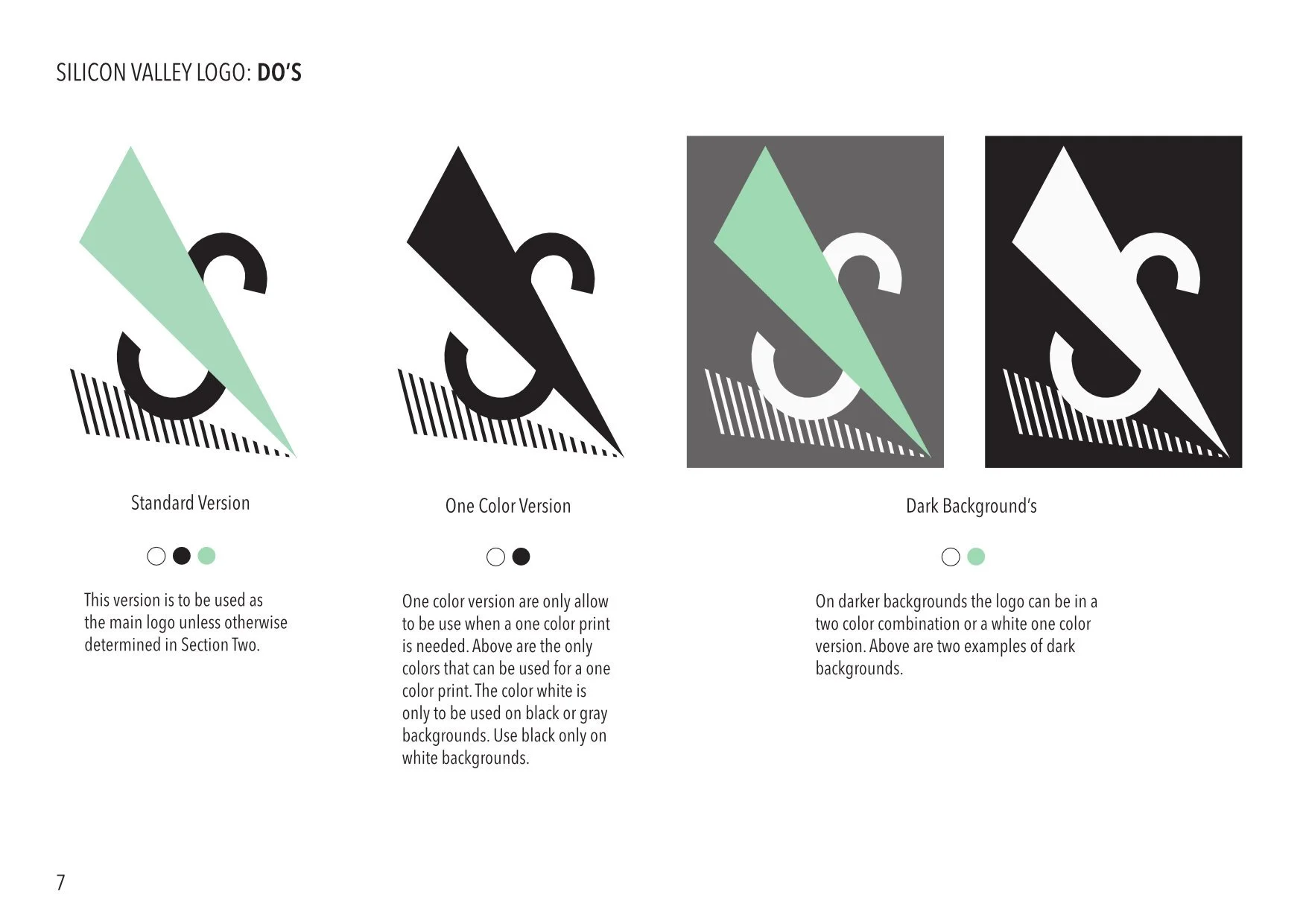
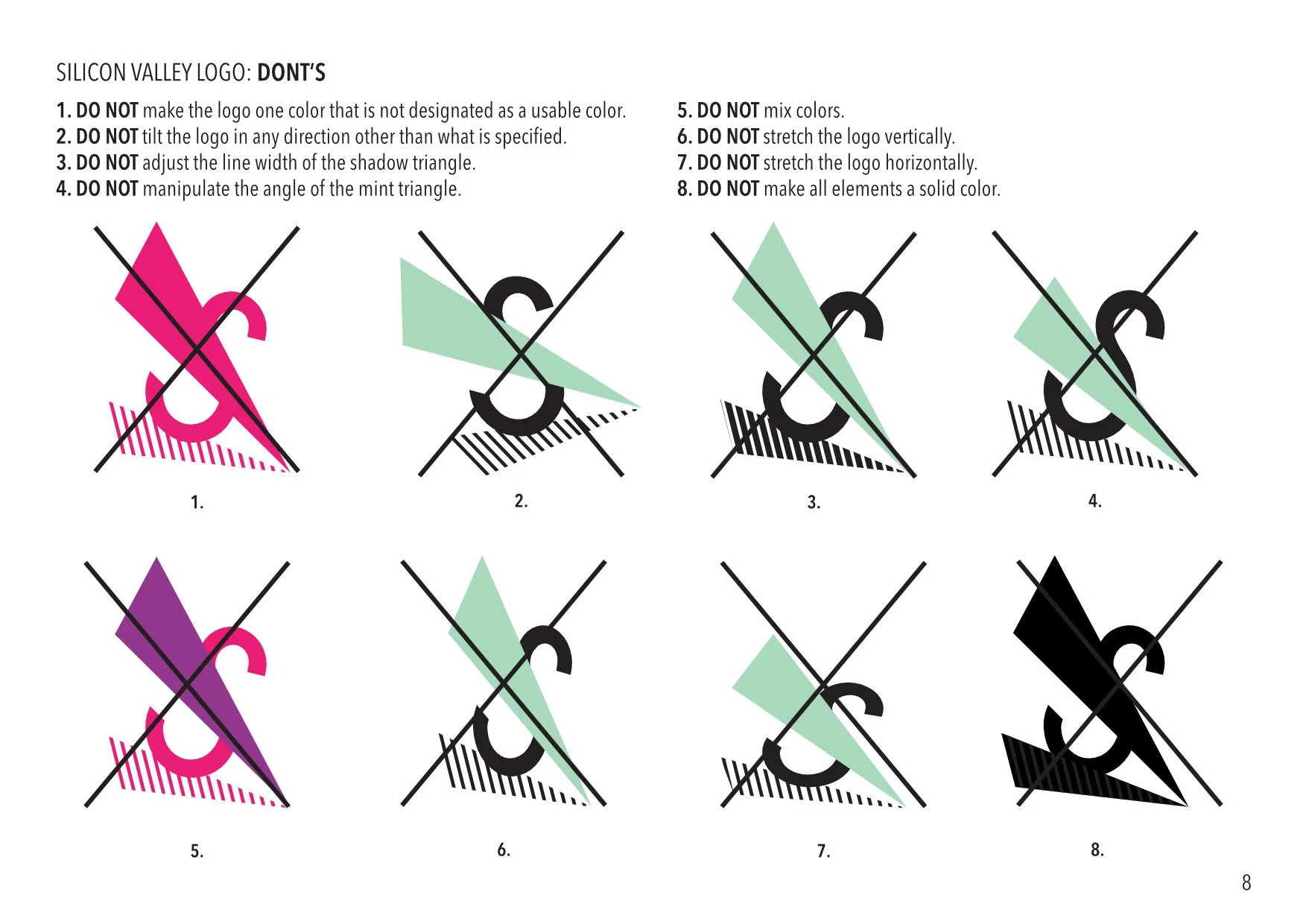
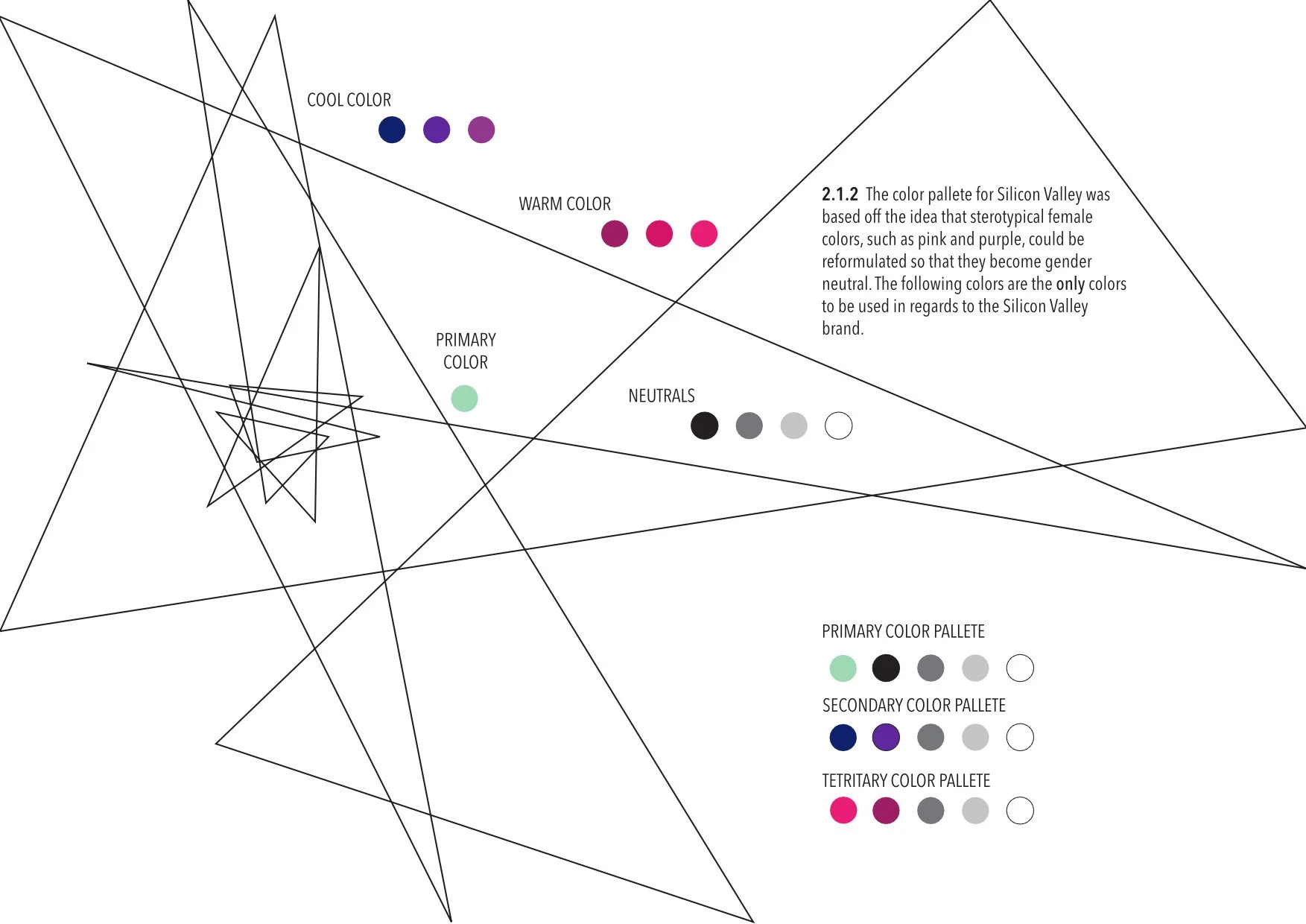
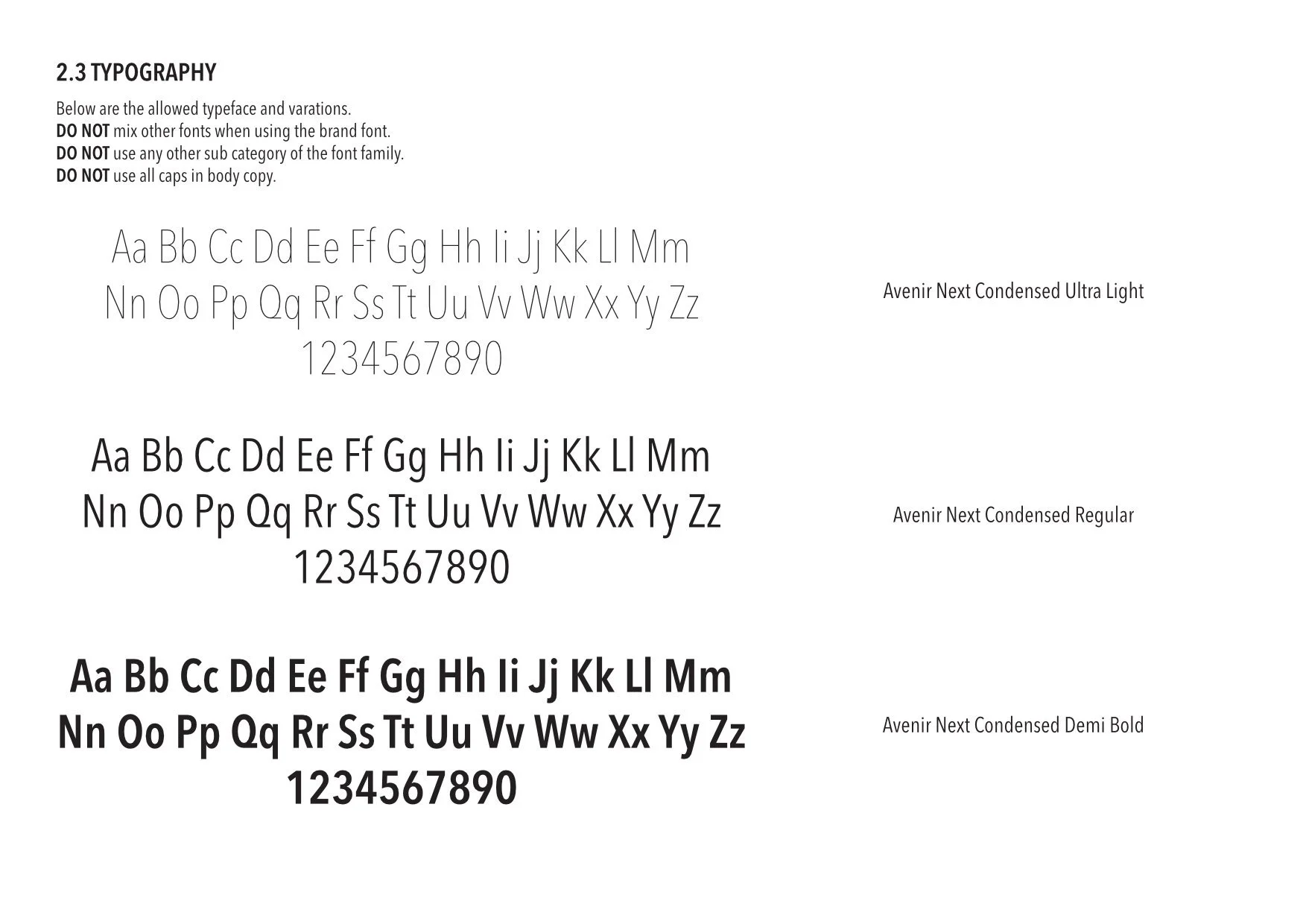
The State of Silicon Valley Branding
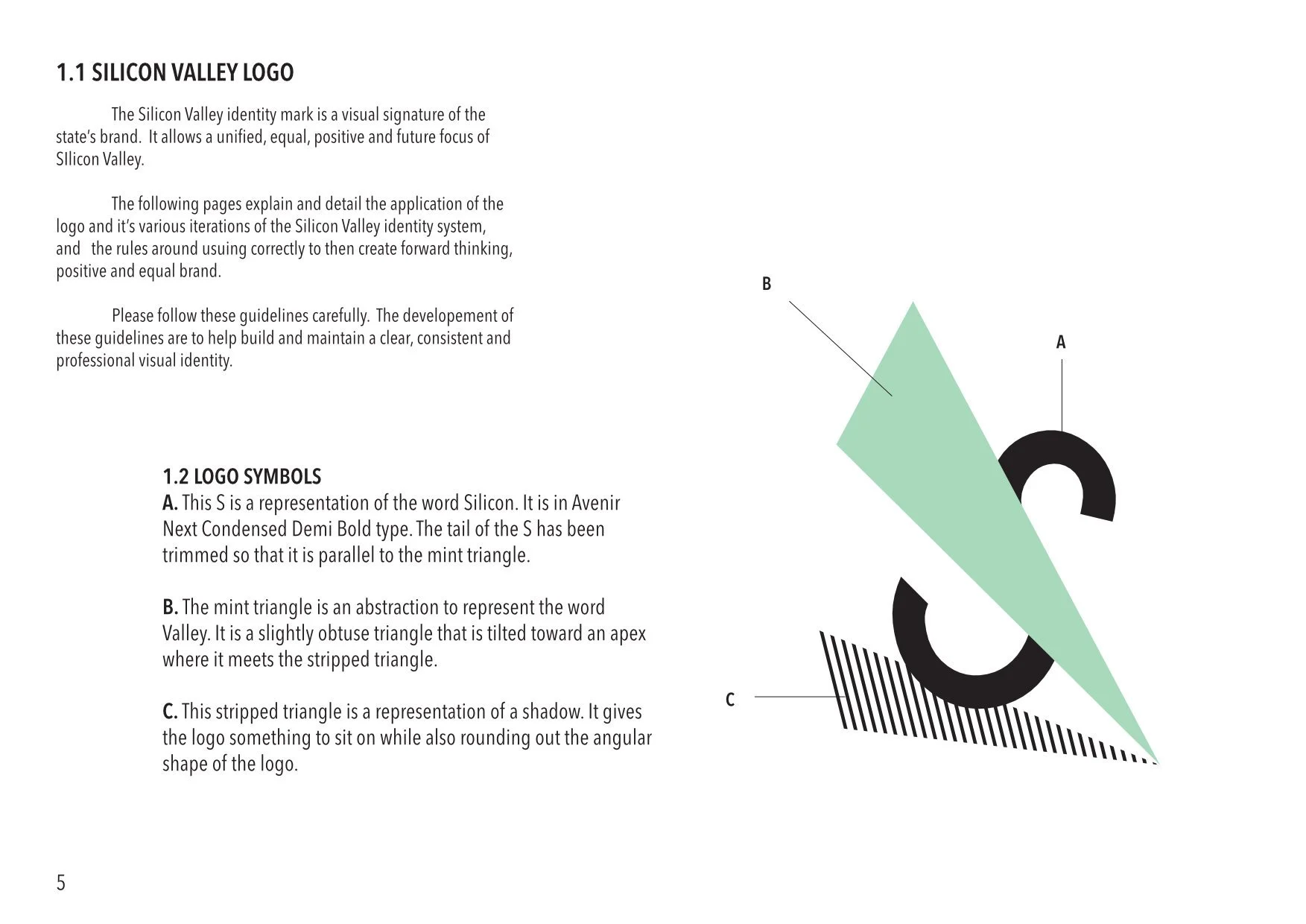
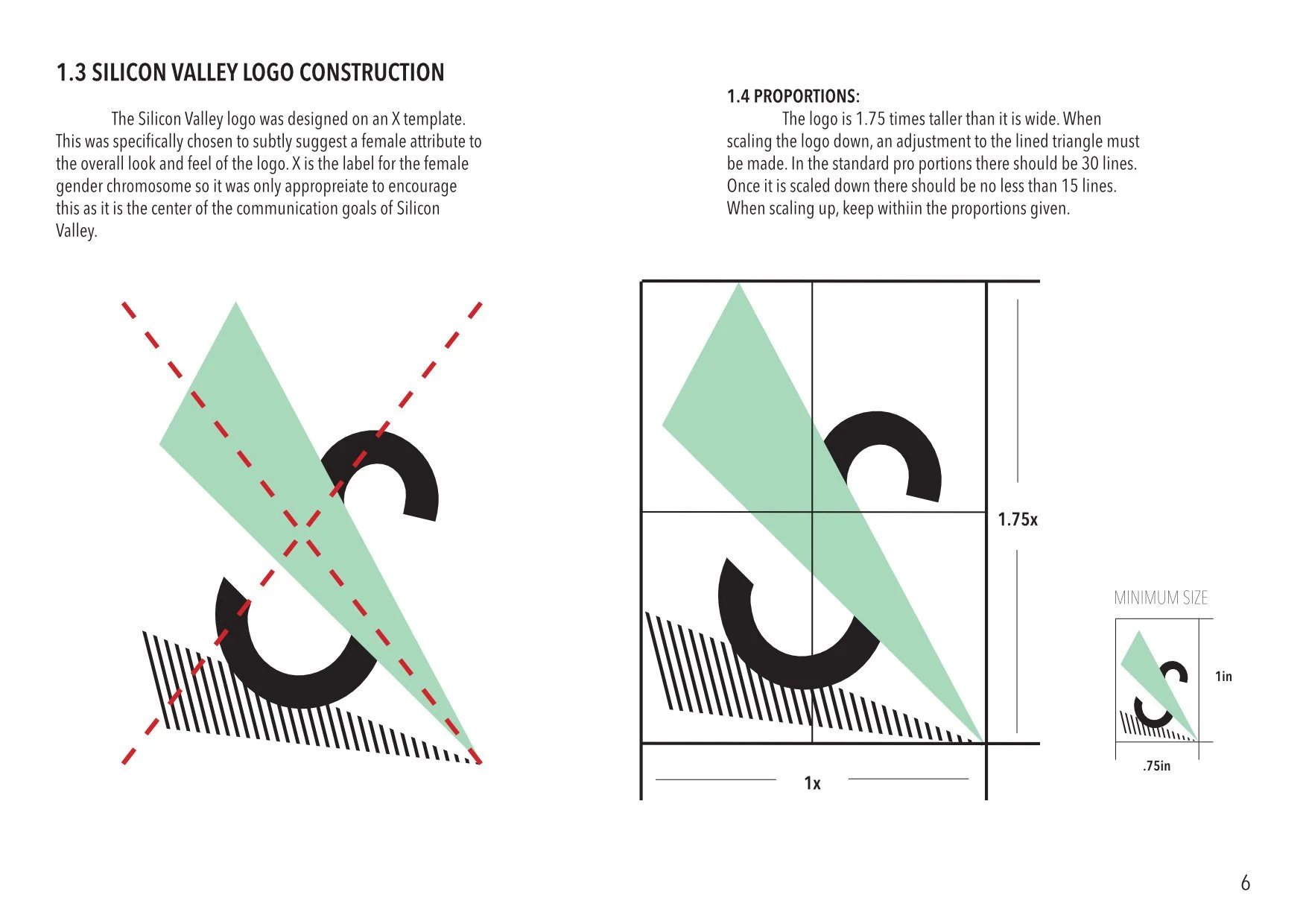
After researching and distilling down the motives of the proposition, I chose to brand Silicon Valley, but not in the way that Draper probably would embrace.